Canada
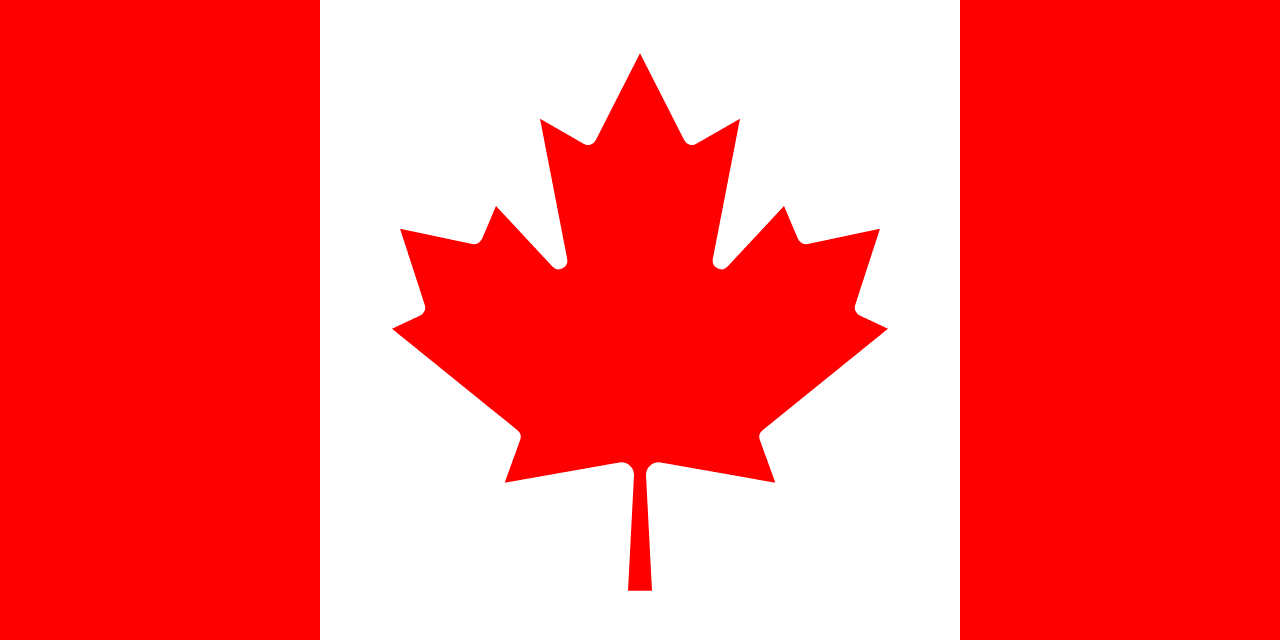
Canada is a country in North America, with its capital at Ottawa, and is home to roughly 41.3M people.
Its official languages are English, French; the currency in circulation is Canadian dollar ($); people from here are called Canadian.
> INTEL_
> NOTABLE_
- »Canada has more lakes than the rest of the world combined.
- »Its coastline is the longest of any country, at over 200,000 km.
- »The border with the United States is the longest international border in the world.
> THE OUTLINE_
Its territory comes in pieces: one mainland carrying 82% of the area, plus five further landmasses large enough to show up at map scale.
It straddles the Arctic Circle.
> BORDERS_
Canada has exactly one neighbour: United States to the south.
> THE CAPITAL_
Ottawa was chosen by Queen Victoria in 1857 as a compromise between rival claims, and because its distance from the American border made it defensible. It sits on the boundary between the English and French-speaking provinces.
> SCALE_
9,861,925 km² (3,807,709 sq mi), 2nd largest of 198 countries and territories on file, almost exactly the size of the United States.
Population 41,262,329, 37th of 198 on file. That averages 4.2 per km² (11 per sq mi).
> THE FLAG_
Surprisingly recent: the maple leaf flag was adopted only in 1965, after a bitter parliamentary debate known as the Great Flag Debate. The stylised leaf has eleven points, chosen for how it behaved in wind-tunnel tests.