Iceland
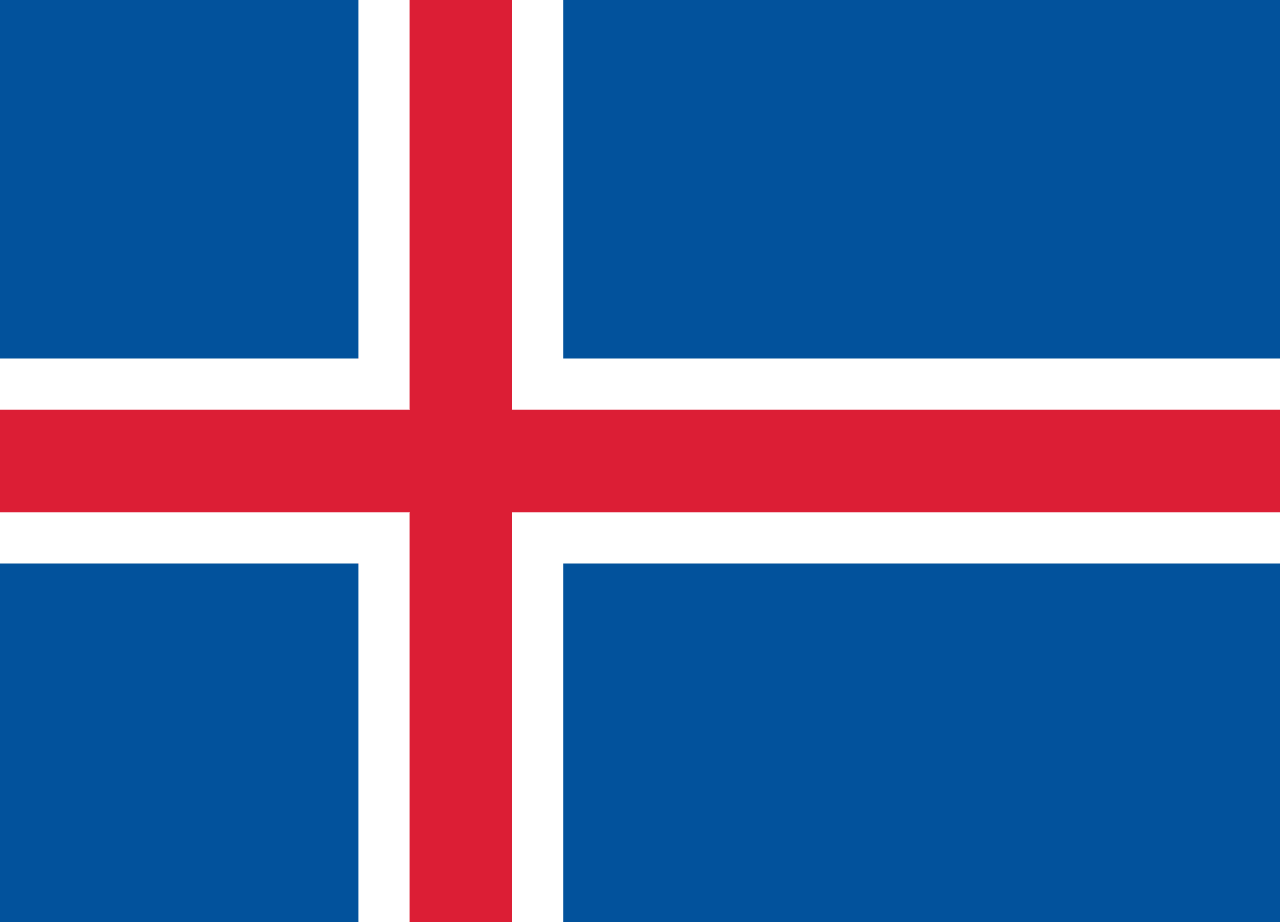
Iceland is a country in Northern Europe, with its capital at Reykjavík, and is home to roughly 386.5K people.
Icelandic is the official language; the currency in circulation is Icelandic króna (kr); people from here are called Icelander.
> INTEL_
> NOTABLE_
- »Iceland's parliament, the Althing, was founded in 930 AD and is among the oldest still functioning.
- »Almost all of its electricity and heating come from hydro and geothermal sources.
- »There are no mosquitoes.
> BORDERS_
Iceland shares no land border with anything, so every approach is by sea or air. The closest other territories on file are Ireland (1,439 km), United Kingdom (1,518 km) and Norway (1,533 km), measured centre to centre.
> THE CAPITAL_
Reykjavík means 'smoky bay', for the steam its Norse settlers saw rising from geothermal vents. It is the world's northernmost capital of a sovereign state and is heated almost entirely by geothermal water.
> SCALE_
100,811 km² (38,923 sq mi), 105th largest of 198 countries and territories on file, almost exactly the size of South Korea.
Population 386,506, 175th of 198 on file. That averages 3.8 per km² (9.9 per sq mi).
> THE FLAG_
A Nordic cross in the colours of the island itself: red for its volcanoes, white for its ice and snow, blue for the Atlantic.