Japan
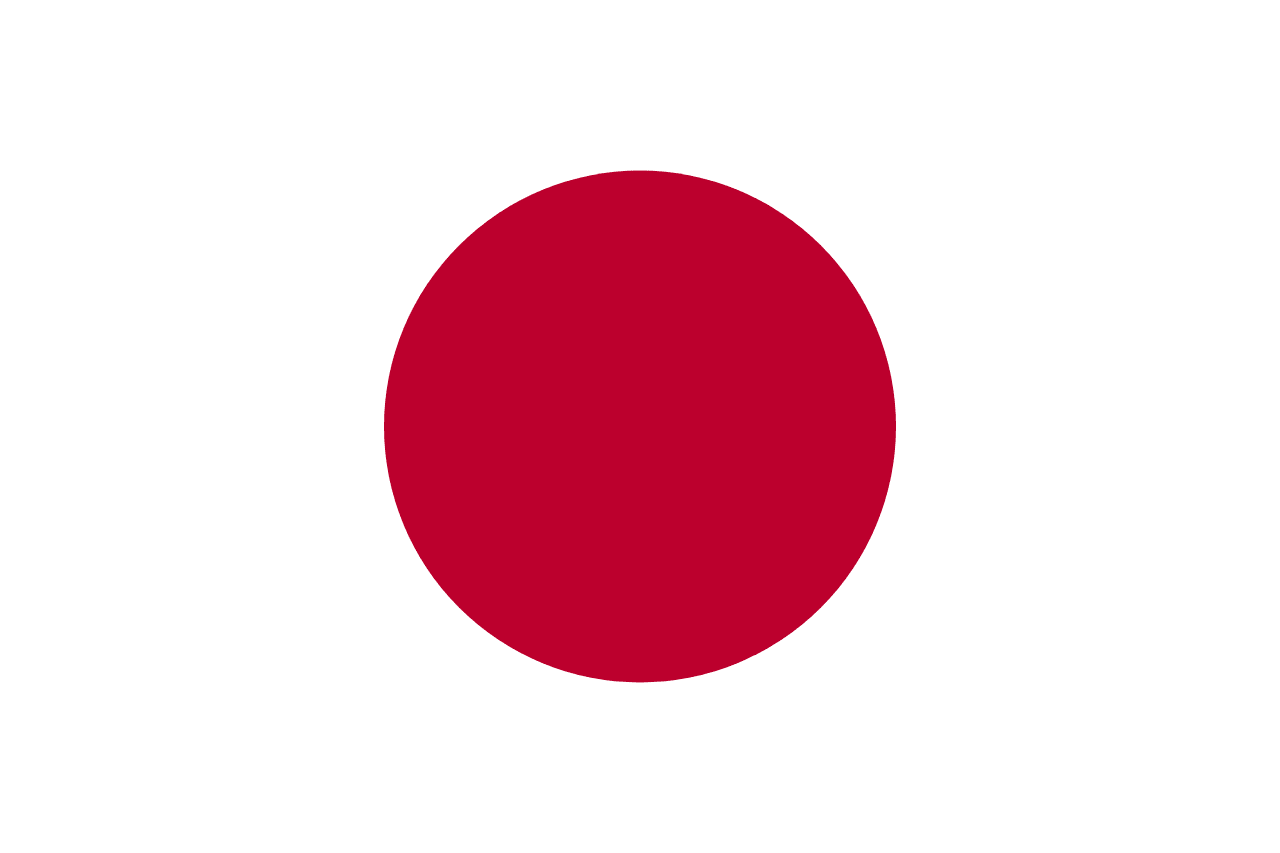
Japan is a country in Eastern Asia, with its capital at Tokyo, and is home to roughly 124.0M people.
Japanese is the official language; the currency in circulation is Japanese yen (¥); people from here are called Japanese.
> INTEL_
> NOTABLE_
- »Japan has over 6,000 islands, and about three-quarters of the country is mountainous.
- »It has more people aged over 100 per capita than almost anywhere else.
- »The Shinkansen has run since 1964 with an extraordinary safety and punctuality record.
> THE OUTLINE_
Its territory comes in pieces: one mainland carrying 62% of the area, plus three further landmasses large enough to show up at map scale.
> BORDERS_
Japan shares no land border with anything, so every approach is by sea or air. The closest other territories on file are South Korea (903 km), North Korea (1,017 km) and Taiwan (2,169 km), measured centre to centre.
> THE CAPITAL_
Tokyo was a fishing village called Edo until the shogunate made it their seat in 1603. When the emperor moved there in 1868 it was renamed Tokyo, 'eastern capital'. Kyoto had held the role for over a thousand years.
> SCALE_
371,809 km² (143,556 sq mi), 61st largest of 198 countries and territories on file, almost exactly the size of Germany.
Population 123,975,371, 12th of 198 on file. That averages 333 per km² (864 per sq mi).
> THE FLAG_
The Hinomaru, meaning 'circle of the sun', reflects the country's name: Nippon is written with characters meaning sun-origin. It was used for centuries before being formally adopted in 1870.