Argentina
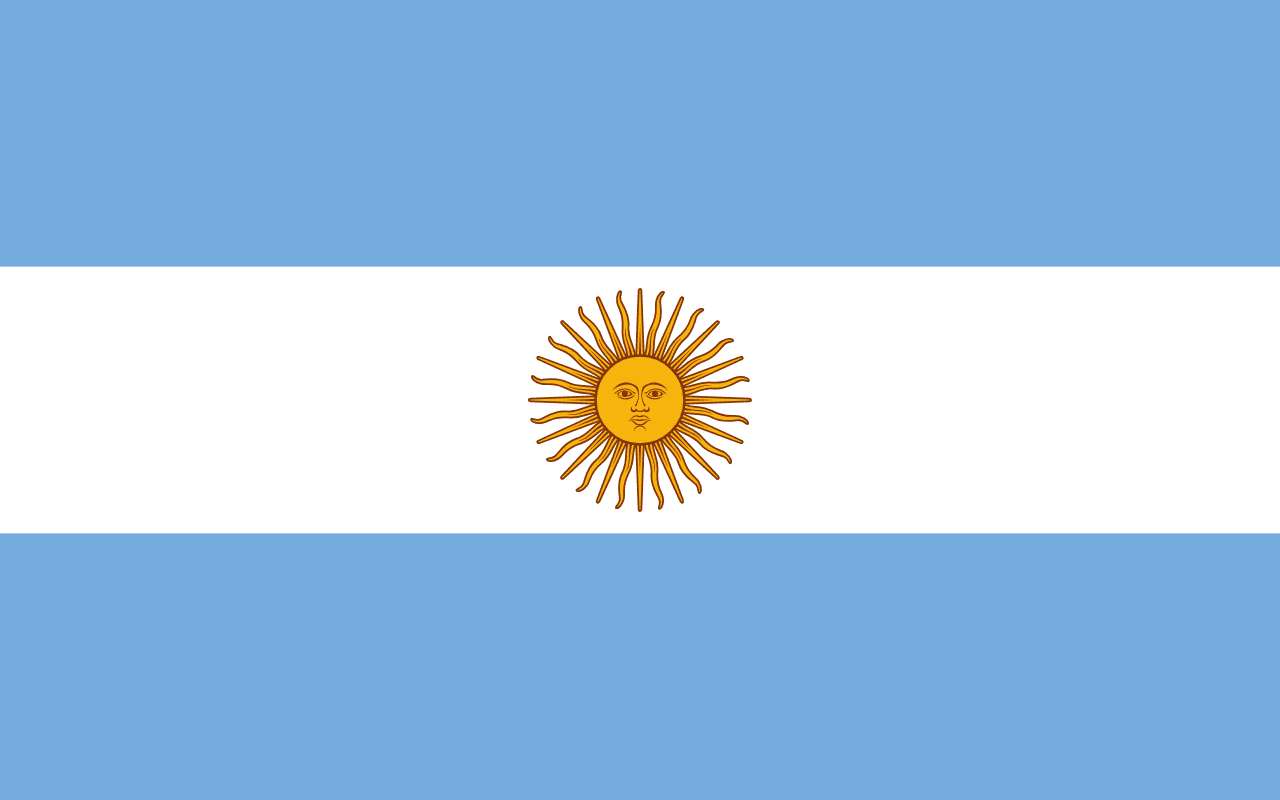
Argentina (officially Argentine Republic) is a country in South America, with its capital at Buenos Aires, and is home to roughly 45.7M people.
Its official languages are Guaraní, Spanish; the currency in circulation is Argentine peso ($); people from here are called Argentine.
> INTEL_
> NOTABLE_
- »Aconcagua, at nearly 7,000 m, is the highest peak outside Asia.
- »The Argentine and Chilean claim to Patagonia's icefields left one stretch of their border undefined to this day.
> THE OUTLINE_
Argentina straddles the Tropic of Capricorn.
> BORDERS_
Argentina touches five neighbours: Bolivia to the north, Brazil to the northeast, Chile to the west, Paraguay to the northeast and Uruguay to the east. Directions run from one centre to the other.
> THE CAPITAL_
Buenos Aires means 'good airs', for the patron saint of sailors. Argentina moved its government here permanently only in 1880 after decades of conflict with the provinces over whether the port city should dominate the country.
> SCALE_
2,781,072 km² (1,073,777 sq mi), 8th largest of 198 countries and territories on file, almost exactly the size of Kazakhstan.
Population 45,696,159, 35th of 198 on file. That averages 16 per km² (43 per sq mi).
> THE FLAG_
The Sun of May at the centre commemorates the sun said to have broken through the clouds over Buenos Aires during the May Revolution of 1810. The pale blue and white were the colours worn by the revolutionaries.