Germany
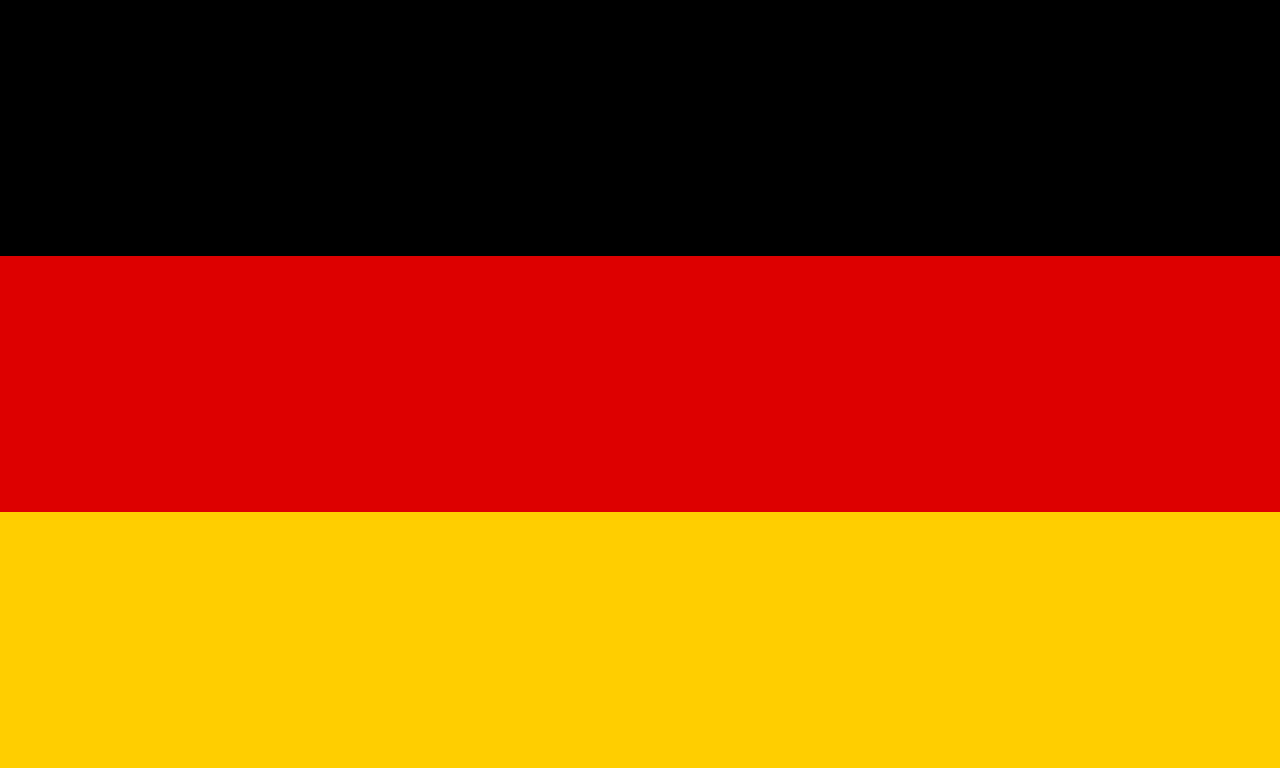
Germany (officially Federal Republic of Germany) is a country in Western Europe, with its capital at Berlin, and is home to roughly 83.5M people.
German is the official language; the currency in circulation is Euro (€); people from here are called German.
> INTEL_
> NOTABLE_
- »Germany has no federal speed limit on much of its motorway network.
- »It shares borders with nine countries, more than any other in Europe.
> BORDERS_
Germany touches nine neighbours: Austria to the southeast, Belgium to the west, Czechia to the east, Denmark to the north, France to the southwest, Luxembourg to the southwest, Netherlands to the northwest, Poland to the east and Switzerland to the south. Directions run from one centre to the other. Neighbours in seven different compass directions make this one of the better-connected outlines in the set.
> THE CAPITAL_
Berlin returned as capital only in 1990. Bonn had served as West Germany's provisional seat for forty years, and the move back was decided by a parliamentary vote of 338 to 320.
> SCALE_
355,477 km² (137,250 sq mi), 62nd largest of 198 countries and territories on file, almost exactly the size of the Republic of the Congo.
Population 83,516,593, 19th of 198 on file. That averages 235 per km² (608 per sq mi).
> THE FLAG_
Black, red and gold trace to the uniforms of the Lützow Free Corps in the Napoleonic wars and to the 1848 revolutions, becoming the colours of German liberal democracy, which is why the Nazi regime discarded them and why the Federal Republic restored them.